An Intergovernmental institution under
United Nations Treaty Series 49006 / 49007

EUCLID Faculty Profiles

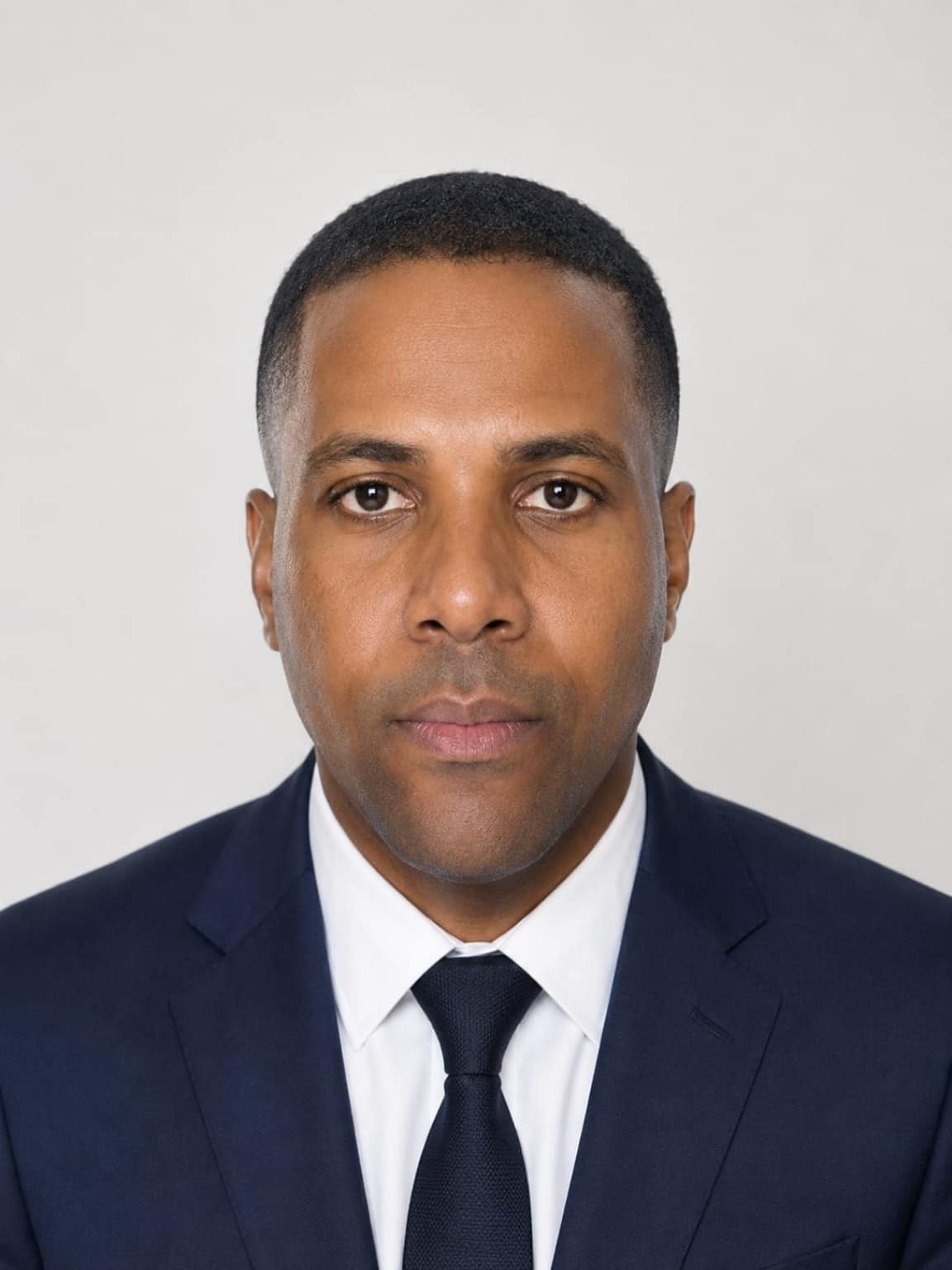
Dr Charles Derond

Senior Lecturer

Charles Derond is a Catholic moral theologian and ethicist who holds a PhD in Ethics from the University of Strasbourg (Faculty of Catholic Theology). His work operates at the crossroads of theologia moralis, social ethics, and interdisciplinary research, with a sustained focus on poverty, human dignity, and economic justice, especially within Caribbean and postcolonial settings. He is currently finalising an advanced doctoral manuscript that synthesises his peer-reviewed publications into a coherent theological ethics of poverty and social justice, integrating economics and public policy into a Catholic framework.

Dr. Derond's intellectual formation is markedly interdisciplinary: he earned a DEA in Economics from the University of the Antilles, a degree in Catholic Theology from DOMUNI/University of Lorraine, and a Certificate in Mathematics from UPMC Paris 6. Based in Martinique, he has worked as a certified mathematics teacher in the French national education system and as Head of the Business Relations Office, giving him direct experience of both educational practice and socio-economic realities. He is affiliated with the MEMIAD research unit at the University of the Antilles and the Ethics Axis of UR 4377 Theology at the University of Strasbourg, publishing actively in French, Spanish, and English.

📅 Last updated:
Research & Interests:

Dr. Derond’s research agenda develops a Catholic theological ethics that critically engages contemporary economic structures and public policy. His 2025 publications explore the moral grammar of poverty and dignity, Christian hospitality as a principle of ecclesial and social unity, environmental responsibility in contexts of deprivation, and the econometric analysis of social dynamics. He consistently attends to Caribbean and postcolonial questions, addressing themes such as land, expropriation, and the social commitment of the Church in unequal societies. Methodologically, his work weaves together moral theology, social-scientific analysis, and the Catholic social tradition, producing scholarship that is both contextually anchored and theologically rigorous. His areas of teaching competency include the philosophy and theology of education, the transmission of religion in contemporary cultures, ecclesiology (especially the theology of hospitality and apostolic succession), and the integration of postcolonial perspectives into theological curricula. His multilingual fluency enables him to teach and mentor students in French, Spanish, and English-speaking academic contexts.

Faculty Relationships at EUCLID:

At EUCLID, faculty interactions are intentionally personal, responsive, and relationship-centered. Students connect with professors primarily through direct email and scheduled Zoom sessions, creating regular opportunities for substantive dialogue rather than one-way communication.

Professors respond promptly to emails with detailed, constructive feedback and are readily available for one-on-one Zoom meetings to discuss coursework, research direction, thesis development, or career goals. These interactions are not limited to academic questions; they often evolve into ongoing mentorship relationships where faculty serve as professional and academic role models. Students benefit from professors’ real-world experience in global affairs, sustainable development, diplomacy, and related fields, gaining practical insights that complement the formal curriculum.

The emphasis is on genuine relationship building. Many students develop lasting professional connections with their professors, who actively support their academic progress and post-graduation objectives. This accessible, human-centered faculty model is a defining feature of the EUCLID experience, designed to foster intellectual growth, professional maturity, and meaningful scholarly collaboration.

Office: Martinique

L’érosion des marques des universités d’élite : L’accessibilité en ligne, les changements idéologiques et la montée des concurrents mondiaux

Les grandes universités américaines, en particulier l'Ivy League, ont longtemps symbolisé l'exclusivité, le mérite rigoureux…

Le paysage changeant de l’enseignement supérieur mondial : Les étudiants africains et asiatiques se tournent vers leur pays d’origine

Une transformation discrète mais profonde est en cours dans le domaine de la mobilité internationale…