An Intergovernmental institution under
United Nations Treaty Series 49006 / 49007

EUCLID Faculty Profiles

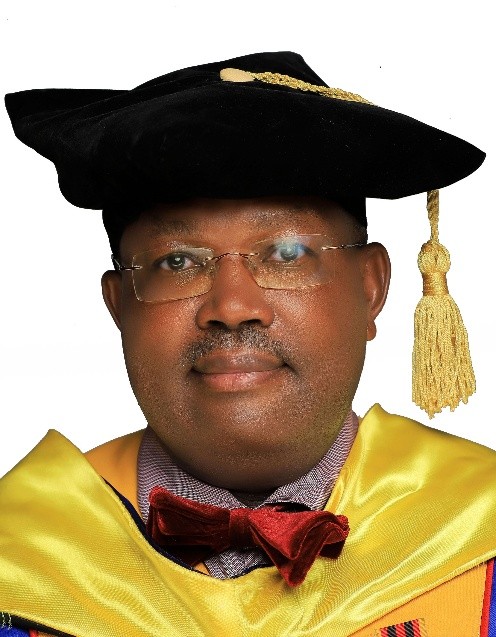
Dr. Atwoki Rusoke Tagaswiire

Associate Professor of Forensic Sciences, Toxicology and Defense Administration

Dr. Atwoki Rusoke Tagaswiire is a Ugandan military officer, forensic scientist, toxicologist, and academic administrator. He is an Associate Professor of Forensic Sciences, Toxicology and Defense Administration at EUCLID (Euclid University), where he has served since April 30, 2026. He is a recognized specialist in CBRNe (chemical, biological, radiological, nuclear, and explosives) legal, technical, and policy expertise, with extensive experience in global public health, forensic sciences, and toxicology. Dr. Tagaswiire is based in Kampala, Uganda, and holds Ugandan nationality. He also serves as a senior officer in the Uganda Peoples' Defense Forces, where he pioneered the establishment and command of the NBC (Nuclear, Chemical, Biological) Regiment from 2009 to 2024. He also served as Deputy Director of the Pioneer Campus of India's National Forensic Sciences University, Uganda Campus (2022-2024), and has been the inaugural Chief Toxicologist in the Ministry of Defense since 2007.

📅 Last updated:

Research & Interests:

Dr. Tagaswiire is an author and co-author of numerous research publications and policy documents in forensic sciences, toxicology, and global health security. His research interests lie at the intersection of forensic toxicology, environmental health, artificial intelligence applications in forensic sciences, and CBRNe risk mitigation. His doctoral dissertation at EUCLID examined the epidemiological association between developmental exposure to perfluorohexanesulfonic acid (PFHxS) and attention-deficit/hyperactivity disorder in childhood, with significant international research and policy implications. He has published systematic reviews on artificial intelligence approaches in forensic toxicology and has contributed to international discourse on biorisk management, biosecurity, and HIV microbicides for Africa. His work bridges scientific research, policy development, and operational implementation in defense and public health contexts. Selected Publications •Systematic Review of Artificial Intelligence Approaches in Forensic Toxicology. •Epidemiological Association Between Developmental PFHxS Exposures and ADHD in Childhood: A Systematic Review with International Research and Policy Implications. EUCLID Doctoral Dissertation, 2022. •Tagaswiire, A., Cleenewerck de Kiev, L., & Lam, J. (2022). Epidemiological Association between Developmental PFHxS Exposures and ADHD in Childhood: Protocol For A Systematic Review of the Evidence. Zenodo. https://doi.org/10.5281/zenodo.5862147 •HIV microbicides for Africa. Chemistry World, December 2015. Royal Society of Chemistry. •Biorisk management in the context of Uganda. 5th Annual International Symposium “Biosecurity and Biosafety: future trends and solutions,” Milan, Italy, 2014.

Faculty Relationships at EUCLID:

At EUCLID, faculty interactions are intentionally personal, responsive, and relationship-centered. Students connect with professors primarily through direct email and scheduled Zoom sessions, creating regular opportunities for substantive dialogue rather than one-way communication.

Professors respond promptly to emails with detailed, constructive feedback and are readily available for one-on-one Zoom meetings to discuss coursework, research direction, thesis development, or career goals. These interactions are not limited to academic questions; they often evolve into ongoing mentorship relationships where faculty serve as professional and academic role models. Students benefit from professors’ real-world experience in global affairs, sustainable development, diplomacy, and related fields, gaining practical insights that complement the formal curriculum.

The emphasis is on genuine relationship building. Many students develop lasting professional connections with their professors, who actively support their academic progress and post-graduation objectives. This accessible, human-centered faculty model is a defining feature of the EUCLID experience, designed to foster intellectual growth, professional maturity, and meaningful scholarly collaboration.

Office: Uganda

EUCLID Report on visits to Rwanda and Ethiopia

EUCLID (Euclid University) today released details of the recent official mission undertaken by Professor Laurent…

President Touadéra presides over 2025 convocation

Bangui, Central African Republic – November 6, 2026 – His Excellency Professor Faustin-Archange Touadéra, President…