An Intergovernmental institution under
United Nations Treaty Series 49006 / 49007

EUCLID Faculty Profiles

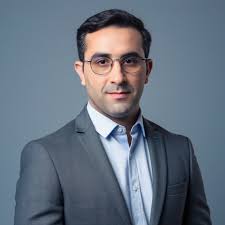
Dr. Ramzi Mraidi

Associate Professor of Statistics

Dr. Ramzi Mraidi is a French statistician and epidemiologist who serves as an Associate Professor of Statistics at EUCLID (Euclid University), an intergovernmental institution. He is a skilled research scientist with a strong background in data management, clinical trials, and epidemiology. His work focuses on applying advanced statistical methods to public health challenges, particularly infectious disease surveillance and vaccination campaigns.

Dr. Mraidi has a strong academic background with degrees from the University of La Réunion and EUCLID. He earned: Ph.D./Doctorate in Applied Mathematics for the Life and Social Sciences from Université de La Réunion. His doctoral thesis focused on modeling disease transmission, specifically on the Modélisation et contrôle de la transmission du virus de la maladie de Newcastle dans les élevages aviaires familiaux de Madagascar. Master of Science in Statistical and Computational Information Processing from Université de La Réunion. Master of Business Administration (MBA) in International Organizations from EUCLID, an intergovernmental institution, reflecting his interest in global governance and policy.

Dr. Mraidi's teaching interests center on the application of modern computational methods to statistical and public health problems. They include: Artificial intelligence in statistics and biostatistics; vaccines and immunization modeling. His research focuses on statistics, epidemiology, and applied mathematics. He is interested in the rigorous, innovative, and ethical use of statistics across multiple sectors.


📅 Last updated:

Research & Interests:

Dr. Mraidi is an active researcher with a growing publication record from his time at the International Vaccine Institute (IVI) in Seoul. His notable works include: "Modélisation et contrôle de la transmission du virus de la maladie de Newcastle dans les élevages aviaires familiaux de Madagascar": His doctoral dissertation, which models and controls the transmission of the Newcastle disease virus in small-scale poultry farms in Madagascar. "Coverage of Two-Dose Preemptive Cholera Mass Vaccination Campaign in High-Priority Hotspots in Shashemene, Oromia Region, Ethiopia": A 2024 study he co-authored on oral cholera vaccine (OCV) vaccination coverage in Ethiopia. "Dissecting Water, Sanitation, and Hygiene (WaSH) to Assess Risk Factors for Cholera in Shashemene, Oromia Region, Ethiopia": A 2024 paper in Clinical Infectious Diseases that explores WaSH risk factors for cholera. "Geospatial distribution of Hepatitis E seroprevalence in Nepal, 2021": A 2025 study in PLOS ONE on Hepatitis E seroprevalence and risk factors in Nepal. "Cholera and diarrheal diseases in Cuamba District, Niassa Province, Mozambique": A 2024 study in PLOS Neglected Tropical Diseases on the incidence of diarrheal diseases in Mozambique

Faculty Relationships at EUCLID:

At EUCLID, faculty interactions are intentionally personal, responsive, and relationship-centered. Students connect with professors primarily through direct email and scheduled Zoom sessions, creating regular opportunities for substantive dialogue rather than one-way communication.

Professors respond promptly to emails with detailed, constructive feedback and are readily available for one-on-one Zoom meetings to discuss coursework, research direction, thesis development, or career goals. These interactions are not limited to academic questions; they often evolve into ongoing mentorship relationships where faculty serve as professional and academic role models. Students benefit from professors’ real-world experience in global affairs, sustainable development, diplomacy, and related fields, gaining practical insights that complement the formal curriculum.

The emphasis is on genuine relationship building. Many students develop lasting professional connections with their professors, who actively support their academic progress and post-graduation objectives. This accessible, human-centered faculty model is a defining feature of the EUCLID experience, designed to foster intellectual growth, professional maturity, and meaningful scholarly collaboration.

Office: France

EUCLID Report on visits to Rwanda and Ethiopia

EUCLID (Euclid University) today released details of the recent official mission undertaken by Professor Laurent…

President Touadéra presides over 2025 convocation

Bangui, Central African Republic – November 6, 2026 – His Excellency Professor Faustin-Archange Touadéra, President…