Higher education stands at a historic crossroads. Traditional models, long revered as gateways to knowledge and opportunity, face profound challenges in the United States and United Kingdom. Skyrocketing costs, questions about graduate outcomes, and ideological controversies have eroded public trust. At the same time, the rapid rise of artificial intelligence (AI) disrupts everything from teaching methods to assessment integrity. Institutions that adapt thoughtfully will thrive; those clinging to outdated paradigms risk irrelevance.
A Self-Inflicted Crisis in the West
In the USA and UK, higher education grapples with a multifaceted crisis, much of it self-inflicted. Prestigious brands like Harvard have faced intense scrutiny over issues including diversity, equity, and inclusion (DEI) initiatives, ideological conformity often labeled "wokism," and perceived dilution of academic standards. These factors, combined with resistance to genuine globalization, have contributed to declining enrollment in some programs, donor fatigue, and political backlash.
Elite institutions expanded administrative bureaucracies and prioritized certain social agendas, sometimes at the expense of merit, viewpoint diversity, and core academic rigor. Brand prestige, once built on intellectual excellence and groundbreaking research, now contends with accusations of grade inflation, activist-driven curricula, and a failure to prepare students for a hyper-competitive global economy dominated by technology and emerging markets.
This inward focus left many Western universities vulnerable as AI entered the scene.
AI: Disruptor and Enabler of Unethical Shortcuts
Generative AI tools like ChatGPT have transformed learning. Students can produce essays, code, analyses, and even research summaries in seconds. While this democratizes access to information, it also fuels widespread concerns about academic integrity. Faculty report near-universal worries that overreliance on AI erodes critical thinking, originality, and deep engagement.
Many traditional institutions struggle with detection and policy. Remote proctoring and plagiarism tools often lag behind AI capabilities. The result? A quiet erosion of genuine student progression, where credentials may no longer reliably signal mastery. This exacerbates the crisis of value in higher education degrees.
EUCLID’s Proactive Leadership: Embracing AI with Integrity
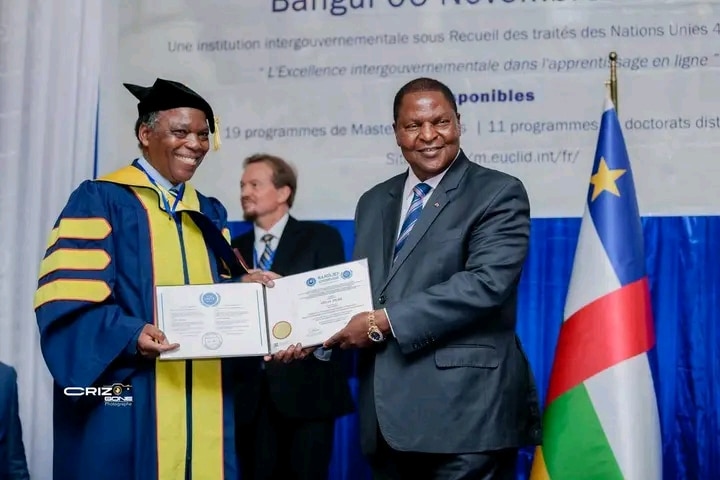
Not all institutions react with panic or prohibition. EUCLID (Euclid University), an intergovernmental treaty-based university, positions itself at the forefront by embracing AI as a core strategic asset while implementing robust safeguards.
EUCLID integrates advanced AI tools across academic and administrative functions to personalize learning, enhance course delivery (including AI video and chat agents trained on its materials), and prepare students for real-world application. Crucially, it pairs this with clear guidelines for students and faculty on ethical AI use. Key measures include:
- Prompt disclosure requirements — Students must transparently document AI assistance.
- Oral examinations as a cornerstone of assessment, verifying genuine understanding beyond written submissions.
- In 2026, a policy shift places the oral exam before the major paper, ensuring foundational mastery precedes final outputs.
This balanced approach—leveraging AI for efficiency and innovation while preserving human accountability—sets EUCLID apart. It demonstrates that technology can elevate education rather than undermine it.
The Enduring Value of Graduate and Doctoral Degrees
EUCLID firmly believes the need for high-quality graduate and doctoral degrees remains stronger than ever. In an AI-saturated world, employers will increasingly seek professionals who can direct AI tools, interpret complex global contexts, and demonstrate ethical leadership. Superficial credentials will lose value; well-prepared, globalized graduates equipped with deep expertise and adaptable skills will thrive amid economic uncertainty, automation, and geopolitical shifts.
Global Realities: Asia, Africa, and Intergovernmental Connections
True resilience requires openness to global economic realities. Asia and Africa represent dynamic growth engines, with rising middle classes, technological leaps, and vast human capital. EUCLID's intergovernmental model fosters connections across borders and cultures, emphasizing diplomacy, sustainable development, and practical global affairs. This prepares graduates not just for Western job markets but for leadership in a multipolar world.
Intergovernmental ties provide unique advantages: neutrality, broad networks, and a focus on transnational challenges like climate, health, and trade—areas where AI can drive transformative solutions.
New Frontiers: MBA and DBA in Artificial Intelligence Architecture and Transformation
To meet emerging demands, EUCLID introduces specialized MBA and DBA programs in Artificial Intelligence Architecture and Transformation. These programs equip future CEOs, CIOs, and globalized entrepreneurs with:
- Strategic understanding of AI systems and architectures.
- Skills in ethical implementation, organizational transformation, and data-driven decision-making.
- Frameworks for leveraging AI in sustainable business models, supply chains, and international diplomacy.
Graduates will lead AI integration across sectors, turning technological disruption into competitive advantage while navigating regulatory, cultural, and ethical complexities.
Charting a Path Forward
The AI revolution does not spell the end of higher education—it demands its reinvention. Western institutions must address internal weaknesses and compete globally. Forward-looking players like EUCLID University show the way: integrate AI boldly, uphold rigorous standards through innovative assessment, embrace globalization, and focus on outcomes that matter in the real world.
In this new era, the most valuable degrees will belong to those who master both machines and human insight. Institutions and students ready to evolve will not merely survive the revolution—they will shape it. For those seeking future-proof, globally oriented advanced education, EUCLID offers a compelling model grounded in integrity, innovation, and international relevance.