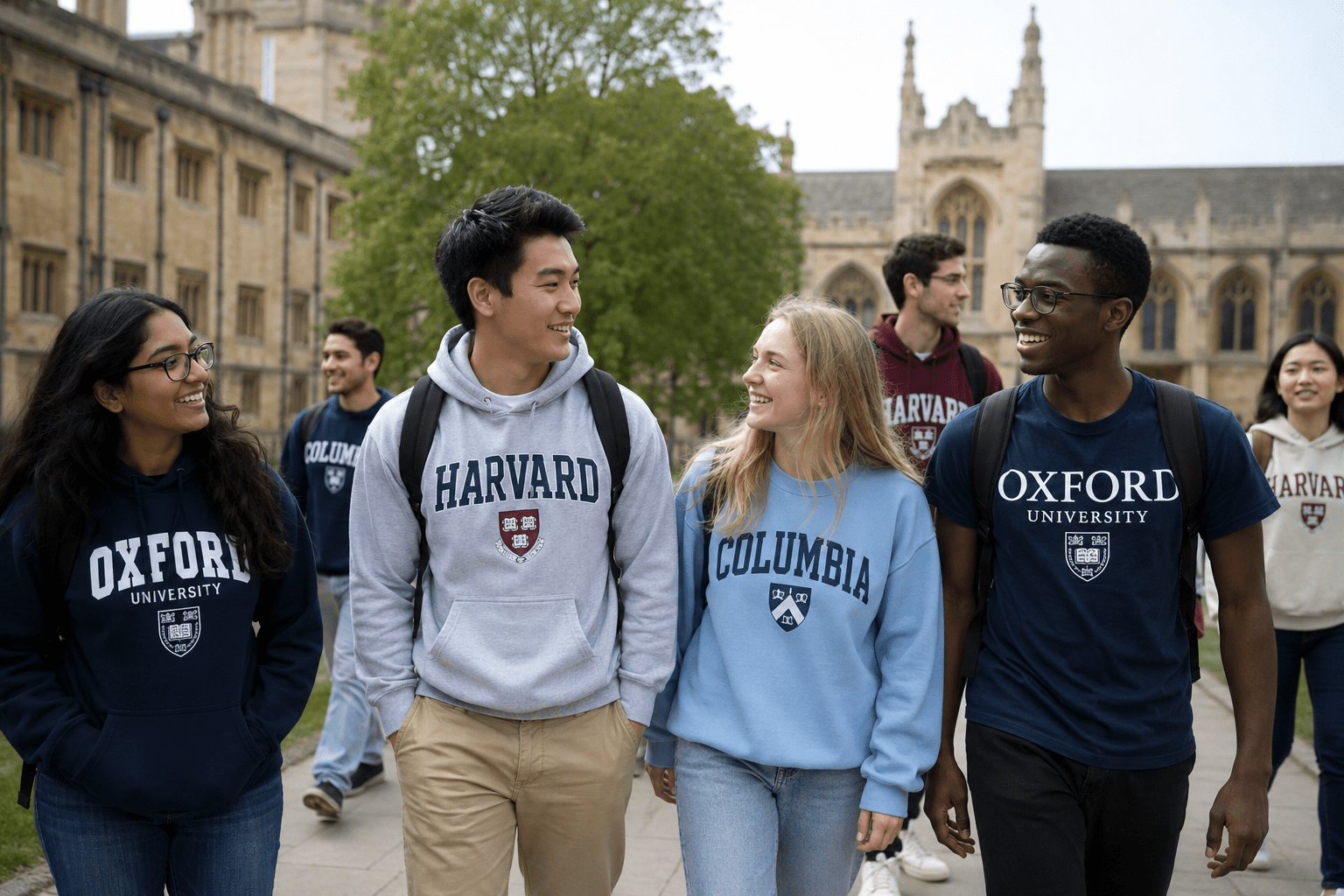
Major American universities, particularly the Ivy League, have long symbolized exclusivity, rigorous merit, and intellectual prestige. Their brands commanded premium value in admissions, alumni networks, and employer perceptions. Yet this aura has faced significant challenges from two internal pressures—widespread online certificates and programs that broaden access—and the embrace of DEI (Diversity, Equity, and Inclusion) initiatives often tied to "wokism." These factors have diluted perceived exclusivity while raising questions about academic standards and ideological conformity. Similar dynamics appear in the UK, even as Asian universities surge in global rankings and reputation.
Online Certificates: Broadening Access or Diluting the Brand?
Elite institutions like Harvard have aggressively expanded into online education through platforms such as Harvard Extension School, Harvard Business School Online (HBS Online), and partnerships like edX. These offer certificates, credentials, and short courses that carry the Harvard name but differ markedly from traditional selective, in-person degrees.
Critics argue this constitutes brand extension that risks dilution. A Harvard name on a low-barrier online certificate—often accessible with minimal prerequisites and completed remotely—contrasts sharply with the hyper-competitive admissions (sub-4% acceptance rates) and immersive campus experience of a full Harvard degree. Discussions on platforms like Quora and Reddit highlight employer skepticism: many view these as revenue-driven "cash grabs" rather than equivalents to traditional credentials. Alumni and observers note that LinkedIn profiles increasingly blur lines between full-degree holders and certificate earners, potentially eroding the prestige signal.
Harvard Business School itself has explored this tension in case studies on brand extensions—leverage versus dilution. Proponents claim it democratizes access and enhances global reach without harming the core brand. Detractors counter that it commoditizes the name: when "Harvard" appears on easily attainable certificates alongside for-profit online mills, the scarcity value that underpins elite prestige weakens. This mirrors broader concerns about higher education's shift toward credentialism over substance, where the brand's emotional resonance and exclusivity fade.
DEI and Ideological Influences on Ivy League Value
Layered atop accessibility is the perception that DEI priorities and associated cultural shifts have compromised merit and free inquiry at Ivies. Reports document extensive DEI bureaucracies, training mandates, and influence on hiring, admissions (pre- and post-Students for Fair Admissions), and curricula across Harvard, Yale, Princeton, and peers.
Critics, including Cornell professor William Jacobson's "Poison Ivies" report, argue these create race-obsessed environments that sidestep merit in favor of identity-based outcomes. High-profile incidents—such as congressional hearings on campus antisemitism, plagiarism controversies involving administrators, and donor revolts—have damaged public trust. Major employers have signaled reluctance to hire from certain "radical" Ivy environments, while surveys and commentary link declining perceived value to ideological conformity over rigorous scholarship.
Real impacts include shifts in research output rankings and alumni/employer sentiment. Perceived value suffers as the brands become associated less with unapologetic excellence and more with campus culture wars. Even defenders acknowledge backlash has prompted some scaling back of explicit DEI language, but the reputational hit lingers. Costs remain high (tuition near $100k/year), amplifying ROI scrutiny when signaling power weakens.
Parallel Trends in the UK
UK universities, especially Russell Group institutions like Oxford and Cambridge, face analogous pressures. "Woke" initiatives—unconscious bias training, EDI (Equality, Diversity, Inclusion) mandates, and decolonization efforts—have drawn criticism for prioritizing ideology over academic freedom. Reports highlight administrative bloat, self-censorship, and external perceptions of politicization.
While not identical to U.S. online proliferation, expanded access via online and modular programs, combined with funding tied to diversity metrics, strains traditional prestige. Public and business sentiment shows growing skepticism, mirroring U.S. trends of viewing elite degrees through a lens of cultural signaling rather than pure merit.
The Ascent of Asian and Global Brands
As Western elites grapple internally, Asian universities—particularly in China, Singapore, Hong Kong, and South Korea—have risen dramatically. In Times Higher Education and other rankings, Tsinghua and Peking Universities lead Asia and challenge globally; Chinese institutions now dominate research output metrics, surpassing Harvard in some.
This reflects massive state investment in research, infrastructure, and talent, unencumbered by equivalent Western cultural debates. Employers and global academics increasingly view top Asian programs as rigorous, innovative, and outcome-focused. For international students and talent, especially in STEM, the perception gap narrows: a Tsinghua degree signals strong capability without the baggage of recent Ivy controversies. Broader global players (e.g., National University of Singapore) further diversify options.
Implications for the Future of Prestige
University brands derive power from scarcity, proven excellence, and neutral pursuit of truth. Online proliferation lowers barriers and risks commoditization. Ideological emphases can shift focus from merit to other goals, inviting skepticism about graduate quality and institutional neutrality. UK parallels suggest this is not purely American. Meanwhile, Asian ascent offers credible alternatives grounded in performance.
Elite Western universities retain immense strengths—networks, endowments, historic cachet. Restoring brand strength likely requires reaffirming selectivity and merit in core operations while navigating access thoughtfully. Without addressing dilution and perception gaps, the "Ivy" (and Oxbridge) premium may continue to erode in a multipolar global education market. The ultimate value of any degree rests on what graduates can do, not just where they studied—but brands still matter, and they are changing.