Online (Asynchonous)
Why Choose EUCLID’s Online PhD in International Defense and Global Security?
Several distinctive features set this Online PhD in International Defense and Global Security apart from other doctoral programs in the field.
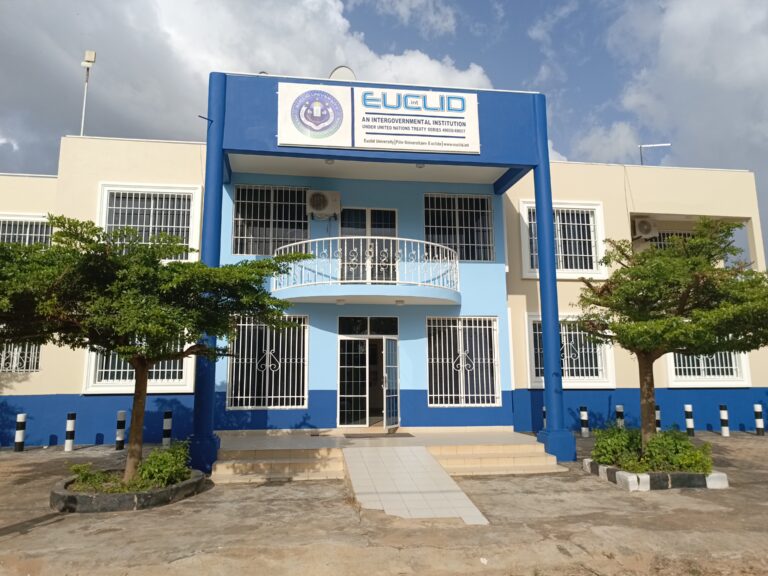
First, EUCLID is the world’s only intergovernmental, treaty-based university. With a UN-registered charter and deep institutional expertise in diplomacy, defense policy, and global security, the university enjoys unique recognition among international organizations, foreign ministries, and defense establishments. This gives graduates of the Online PhD in International Defense and Global Security a distinctive credential that carries weight in multilateral and government circles.
Second, the program is strongly practice-oriented. Courses are designed and taught by faculty who combine academic rigor with senior-level professional experience in defense, intelligence, diplomacy, and crisis management. The curriculum is regularly updated to address today’s most pressing real-world security challenges — from hybrid threats and cybersecurity to great-power competition, regional conflicts, and emerging technologies in defense.
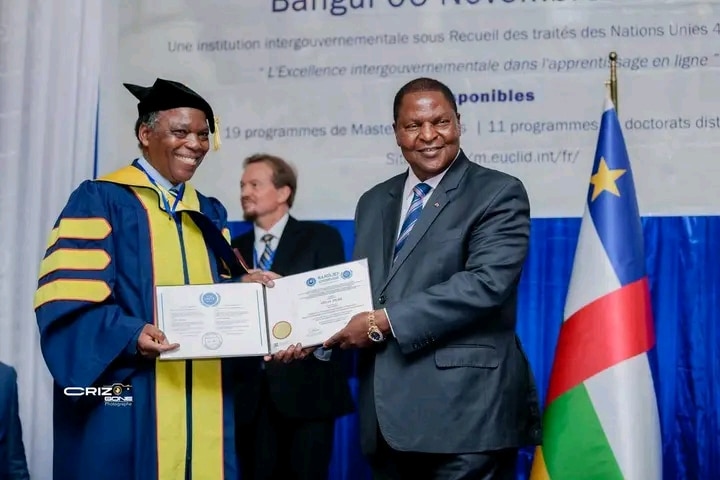
Third, students join a truly global alumni network of ambassadors, defense ministers, senior military officers, and high-level policy advisors serving on four continents. This network provides exceptional opportunities for mentorship, collaboration, and career advancement in international defense and global security.
Fourth, the fully asynchronous online delivery offers maximum flexibility. With no fixed class times or residency requirements, working professionals can complete the Online PhD in International Defense and Global Security from anywhere in the world while continuing their careers.
If you are a mid-career professional seeking a prestigious, flexible, and highly relevant doctorate that bridges theory and practice in today’s complex security environment, EUCLID’s Online PhD in International Defense and Global Security is designed for you.

The program is designed to prepare graduates to lead strategic analysis by applying advanced theoretical frameworks to complex security problems; to evaluate defense policy and assess the effectiveness of national and international defense policies, force structures, and military doctrines; to design evidence‑based security strategies for government agencies, international organizations, or private sector clients; to conduct original research that contributes to the scholarly literature on international defense, global security, intelligence, and strategic studies; to navigate emerging threats such as hybrid warfare, cyber defense, information operations, and asymmetric conflict; and to communicate complex security analyses effectively to diverse audiences, including policymakers, military leaders, and academic peers.
The program consists of doctoral‑level core courses followed by a dissertation. Students are also required to complete foundational courses in academic writing and argumentation. Core courses include Foundations of International Security and Strategic Studies; Geopolitics: Theories, Regions, and Great Power Competition; Defense Policy, Military Strategy, and Transformation; Emerging Threats: Hybrid Warfare, Cyber Defense, and Asymmetric Conflict; Military Doctrine, Joint Operations, and Defense Transformation; Defense Economics, Resource Management, and the Defense Industrial Base; Civil‑Military Relations and Defense Governance; Intelligence, National Security Strategy, and Strategic Surprise; and Advanced Research Methods for Defense and Security Studies. Required foundation courses are International Academic Writing (Doctorate) and Argumentation and Critical Thinking. Suggested focus areas for the dissertation include great power competition and strategic stability; emerging technologies and the future of warfare; intelligence, warning, and strategic surprise; defense transformation and military innovation; cybersecurity and information operations; homeland security and critical infrastructure protection; and transnational threats such as terrorism, organized crime, and hybrid warfare.
Applicants must hold a relevant master’s degree issued by an institution listed in the UNESCO‑IAU World Higher Education Database (WHED) or otherwise duly recognized or accredited. Professional experience in defense, intelligence, security policy, or a related field is strongly preferred. Fluency in English (spoken and written) is required and will be tested. Students are expected to dedicate ten to fifteen effective hours of study per week. Application documents include a completed application form, official transcripts, a research statement of two to three pages, three letters of recommendation, and a current curriculum vitae. All applications are reviewed holistically; the Admissions Committee may also request an interview. Government officials from EUCLID participating states may be eligible for special consideration and scholarships.
ELECTIVE COURSES
|
|||||||||||||||||||||||||||||||||||||||||||||||||||||||||||||||||||||||||||
Note: to consult the current and official curriculum/list of courses from the EUCLID CMS database, please visit: EUCLID Available Degree Programs and follow the program link.
Graduates of the EUCLID PhD in International Defense and Global Security are exceptionally well‑prepared for senior leadership, research, and policy roles across multiple sectors. In national defense and government, they become defense policy analysts, strategic planners, intelligence officers, ministry advisors, or legislative aides. In international organizations, they serve as security specialists at NATO, the United Nations, the African Union, the OSCE, or the European Union, or as security governance advisors. In defense industry and consulting, they work as senior analysts in defense contracting, geopolitical risk consulting, or strategic intelligence firms. In academia and research, they become university professors, post‑doctoral researchers, or think tank fellows at institutions such as RAND, CSIS, IISS, or RUSI. In the non‑governmental sector, they take roles as conflict resolution specialists, humanitarian security coordinators, or peacebuilding advisors. Our alumni have successfully secured employment and promotions in government service and international organizations, including at the level of ambassador and minister.
EUCLID is the only intergovernmental, treaty-based university with a UN registered charter and recognized expertise in diplomacy. Join the alma mater of ambassadors and senior officials globally.
Note: if the PDF brochure is unavailable (or outdated by 2 years), please contact [email protected]