Online (Asynchonous)
Imagine earning a prestigious, fully online doctoral degree from an actual intergovernmental university backed by international treaty — while continuing to serve as a diplomat, civil servant, or natural resource professional.
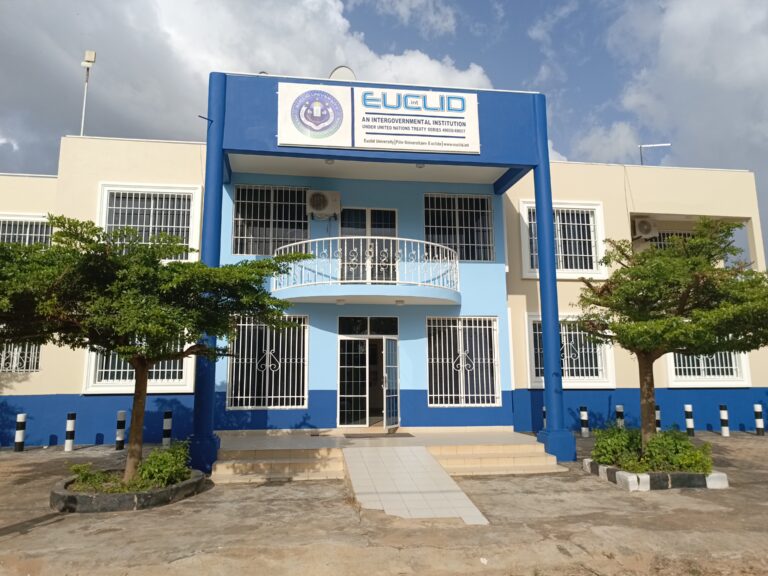
EUCLID (Pôle Universitaire Euclide) is not just another university. We are a treaty-based intergovernmental organization with a formal mandate to train the world’s next generation of environmental leaders, diplomats, and policy experts. Our Online PhD in Natural Resources and Environmental Management (DNRE) delivers exactly what today’s global challenges demand: a rare, rigorous blend of resource governance, environmental policy, climate adaptation, and geospatial technology.
You will master:
Mineral, energy, forest, and wildlife resource management
Natural resource conflict resolution and diplomacy
Remote sensing and GIS for natural resource monitoring
Sustainable resource management and ecological economics
Climate change adaptation and disaster risk reduction
International environmental law and governance
This is the only fully online PhD program in this field offered by an intergovernmental organization — purpose-built for busy professionals who refuse to choose between career impact and academic excellence.
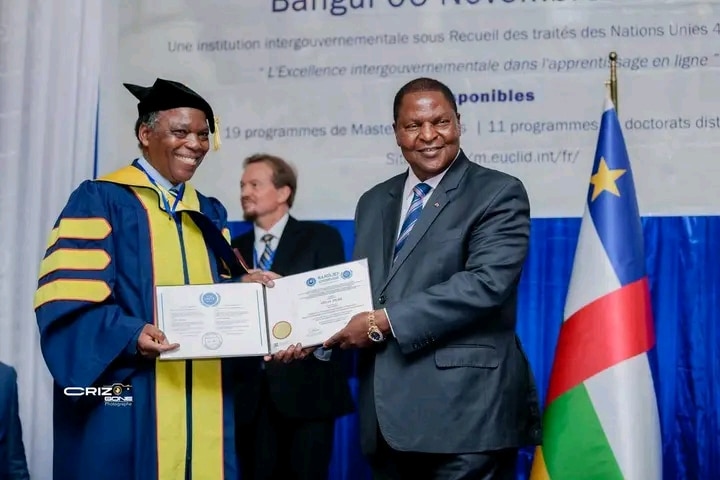
Our students and alumni include current and former senior diplomats, government officials, and sustainability leaders actively shaping resource policy across continents.
Affordable. Flexible. Prestigious. Intergovernmental.
If you’re serious about driving real global change in natural resource management, environmental governance, and sustainability — and you want credentials that truly command respect on the international stage — your doctoral journey starts here.
EUCLID. Where future natural resource leaders are forged.
EUCLID’s Online PhD in Natural Resources and Environmental Management (NREM) represents approximately 55 credits, or 90 credits of post-baccalaureate study. Students entering with a relevant master's degree typically complete 30 US credits of core and elective doctoral coursework, followed by the doctoral dissertation, which is developed in five distinct phases with a total of 25 credits.
The resulting thesis is expected to be a substantial, publishable scholarly work that makes an original contribution to the field and positions the candidate as a subject-matter expert.
This doctoral program offers a rigorous, interdisciplinary examination of natural resources and environmental management. It is designed to develop advanced expertise in:
Mineral, energy, forest, and wildlife resource management
Natural resource law, policy, and conflict resolution
Remote sensing and GIS for natural resource monitoring
Environmental economics, natural capital accounting, and circular economy
Climate change adaptation, disaster risk reduction, and resilience
Sustainable energy systems and policy
Corporate environmental management and sustainability reporting
Strong emphasis is placed on UN frameworks and the Sustainable Development Goals (SDGs), ecological economics, biodiversity conservation, climate adaptation, and transboundary environmental challenges, particularly as they relate to the Global South and developing nations.
Candidates may concentrate their studies and research in one or more of the following areas:
Mineral and energy resource management (including critical minerals for the energy transition)
Fisheries and wildlife management
Forest and land management
Natural resource conflict management and diplomacy
Remote sensing and GIS for natural resource monitoring
Environmental economics and natural capital accounting
Sustainable energy systems and policy
Corporate environmental management and sustainability reporting
Circular economy and waste management
Ecotourism and protected area management
Regionally or country-specific dissertations are particularly welcomed.
Applicants should have a relevant Master’s degree issued by an institution listed in the UNESCO‑IAU World Higher Education Database (WHED) or otherwise duly recognized/accredited.
A background in environmental science, natural resource management, geography, engineering, economics, political science, public policy, or a related field is strongly preferred.
Professional experience in natural resource management, environmental policy, mining, energy, forestry, fisheries, or a related sector is highly desirable but not mandatory.
Government‑sponsored applicants (who are already government staff) may be admitted without the required educational credential if their level of education and experience is deemed sufficient. EUCLID may require these participants to complete bridge courses prior to enrolling in the program.
Fluency in English (spoken and written) is required and will be tested.
Students are expected to be in a position to dedicate 10 to 15 effective hours of study on a weekly basis.
|
PRIMARY COURSES
|
||
|
Code
|
Course Name
|
EUCLID Credits
|
|
International Academic Writing (Doctorate)
|
3
|
|
|
Argumentation and Critical Thinking
|
2
|
|
|
Sustainable Resource Management
|
3
|
|
|
Environmental & Social Impact Assessment (ESIA)
|
3
|
|
|
Systems Thinking in Sustainability
|
3
|
|
|
Applied Ecology & Biodiversity
|
3
|
|
|
Climate Change and Water Resources
|
3
|
|
|
Mineral and Energy Resource Management
|
3
|
|
|
Natural Resource Conflict Management
|
3
|
|
|
Remote Sensing and GIS for Natural Resources
|
3
|
|
|
Fisheries and Wildlife Management
|
3
|
|
|
Sustainable Energy Systems and Policy
|
3
|
|
|
Total Credit Hours (USCH):
|
35
|
|
ELECTIVE COURSES
Note: All courses available in the EUCLID database can be considered elective, after review and approval by your EUCLID counselor. Graduate level degrees may include a certain number of undergraduate electives. Likewise, undergraduate roadmaps may be built using graduate level courses. Again, prospective students are reminded that the final degree roadmap must be reviewed and approved by the Admissions Officer to ensure logical progression of subjects covered and conformity with international standards.
|
STANDARD DEGREE ROADMAP - SUGGESTED ELECTIVES
|
||
|
Code
|
Course Name
|
EUCLID Credits
|
|
Environmental Monitoring & Data Analysis
|
3
|
|
|
Global Environmental Governance: UN & International Law
|
3
|
|
|
Environmental Economics and Natural Capital Accounting
|
3
|
|
|
Corporate Environmental Management and Sustainability Reporting
|
3
|
|
Note: to consult the current and official curriculum/list of courses from the EUCLID CMS database, please visit: EUCLID Available Degree Programs and follow the program link.
The EUCLID PhD in Natural Resources and Environmental Management provides outstanding professional and academic preparation for a successful career in:
Natural resource policy and governance at the international, regional, national, and local levels
International organizations such as UNEP, UNDP, FAO, World Bank, UNIDO, the World Trade Organization, and regional development banks
Government ministries of environment, natural resources, energy, mining, forestry, fisheries, and agriculture
Non‑governmental organizations and civil society (WWF, IUCN, The Nature Conservancy, Environmental Defense Fund)
Private sector resource extraction industries (mining, oil and gas, renewable energy)
Environmental and natural resource consulting
Academia and research institutions
Our alumni have been successful in securing employment and promotions in government service and international organizations, including at the level of ambassador and minister.
EUCLID is the only intergovernmental, treaty-based university with a UN registered charter and recognized expertise in diplomacy. Join the alma mater of ambassadors and senior officials globally.
Note: if the PDF brochure is unavailable (or outdated by 2 years), please contact [email protected]
At EUCLID, we are proud to bring together a dedicated and distinguished faculty of world-class scholars, clinicians, and researchers. Our professors combine exceptional academic credentials with extensive real-world experience in translational research, clinical medicine, and global health leadership.
Drawn from prestigious institutions and international organizations, our faculty members are committed to mentoring the next generation of academic physicians and translational scientists — particularly those serving in the Global South and emerging economies.
The profiles below represent a selection of our outstanding faculty. For the full faculty roster and the professors specifically assigned to this program, please visit our Faculty Profiles Directory.