An Intergovernmental institution under
United Nations Treaty Series 49006 / 49007

EUCLID Faculty Profiles

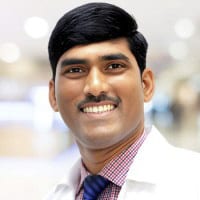
Dr. Surapaneni Krishna Mohan

Professor of Biochemistry

Dr. Surapaneni Krishna Mohan is a distinguished health professions educator, researcher, and academic leader with over 23 years of experience, currently serving as Vice Principal, Professor of Biochemistry, and Head of the Department of Medical Education at Panimalar Medical College Hospital & Research Institute, Chennai, India. His interdisciplinary academic journey is marked by doctoral degrees in Medical Biochemistry and Population Health Informatics, alongside advanced Master's degrees in Health Professions Education from Maastricht University (Netherlands), Suez Canal University (Egypt), and Keele University (UK). He has been recognized globally as one of Stanford University's World's Top 2% Scientists annually since 2021, reflecting the significant impact of his scholarly contributions across biomedical sciences, educational research, and bioethics.

An internationally acclaimed scholar, Dr. Surapaneni holds numerous prestigious fellowships, including FAMEE, FIAMSE, FACadMED, FRSC, FISQua, FLS, FIMSA, FAGE, and FIIOPM, and is a Chartered Scientist (CSci) and NRCC-CC certified clinical chemist. He has further honed his expertise through multiple Harvard Medical School and Harvard Macy Institute fellowships in areas such as art museum-based education, program for educators, technology and AI, assessment and evaluation, and media and medicine. His leadership extends to directing the Bioethics Unit and Clinical Skills & Simulation Centre, where he has pioneered competency-based medical education, faculty development, and the integration of bioethics. With over 370 peer-reviewed publications, nine patents, and an h-index of 38 with over 5,276 citations, Dr. Surapaneni continues to shape the future of healthcare education and practice through his visionary leadership and enduring mentorship.
Research & Interests + Publications:

Dr. Surapaneni's research interests bridge Medical Biochemistry (oxidative stress, molecular biomarkers, metabolic and cardiovascular diseases, cancer biology) with Health Professions Education (competency-based curricula, gamification, art-based learning, and integrated clinical case methodologies), Bioethics (portfolio-based assessment, Entrustable Professional Ethical Actions, and the world's first dual degree in Humanistic and Socialistic Medicine), and Population Health Informatics (AI governance, digital health, and clinical decision support systems). His teaching philosophy transforms learners into reflective problem-solvers through immersive strategies like cinemeducation, technology-enhanced learning, and authentic clinical challenges, fostering curiosity, compassion, and lifelong learning while authoring internationally acclaimed resources such as Essentials of Practical Biochemistry (Lippincott Williams & Wilkins) and the Elsevier Clinical Key Case Series.

Faculty Relationships at EUCLID:

At EUCLID, faculty interactions are intentionally personal, responsive, and relationship-centered. Students connect with professors primarily through direct email and scheduled Zoom sessions, creating regular opportunities for substantive dialogue rather than one-way communication.

Professors respond promptly to emails with detailed, constructive feedback and are readily available for one-on-one Zoom meetings to discuss coursework, research direction, thesis development, or career goals. These interactions are not limited to academic questions; they often evolve into ongoing mentorship relationships where faculty serve as professional and academic role models. Students benefit from professors’ real-world experience in global affairs, sustainable development, diplomacy, and related fields, gaining practical insights that complement the formal curriculum.

The emphasis is on genuine relationship building. Many students develop lasting professional connections with their professors, who actively support their academic progress and post-graduation objectives. This accessible, human-centered faculty model is a defining feature of the EUCLID experience, designed to foster intellectual growth, professional maturity, and meaningful scholarly collaboration.

Office: India

EUCLID University Joins the University of the Arctic (UArctic) as a Full Member Following Unanimous Approval by the UArctic Assembly

Membership Strengthens EUCLID's Climate Change Expertise, Global Engagement, and International Research Networks EUCLID HQ –…

L’érosion des marques des universités d’élite : L’accessibilité en ligne, les changements idéologiques et la montée des concurrents mondiaux

Les grandes universités américaines, en particulier l'Ivy League, ont longtemps symbolisé l'exclusivité, le mérite rigoureux…